Learn
What is graphene oxide?
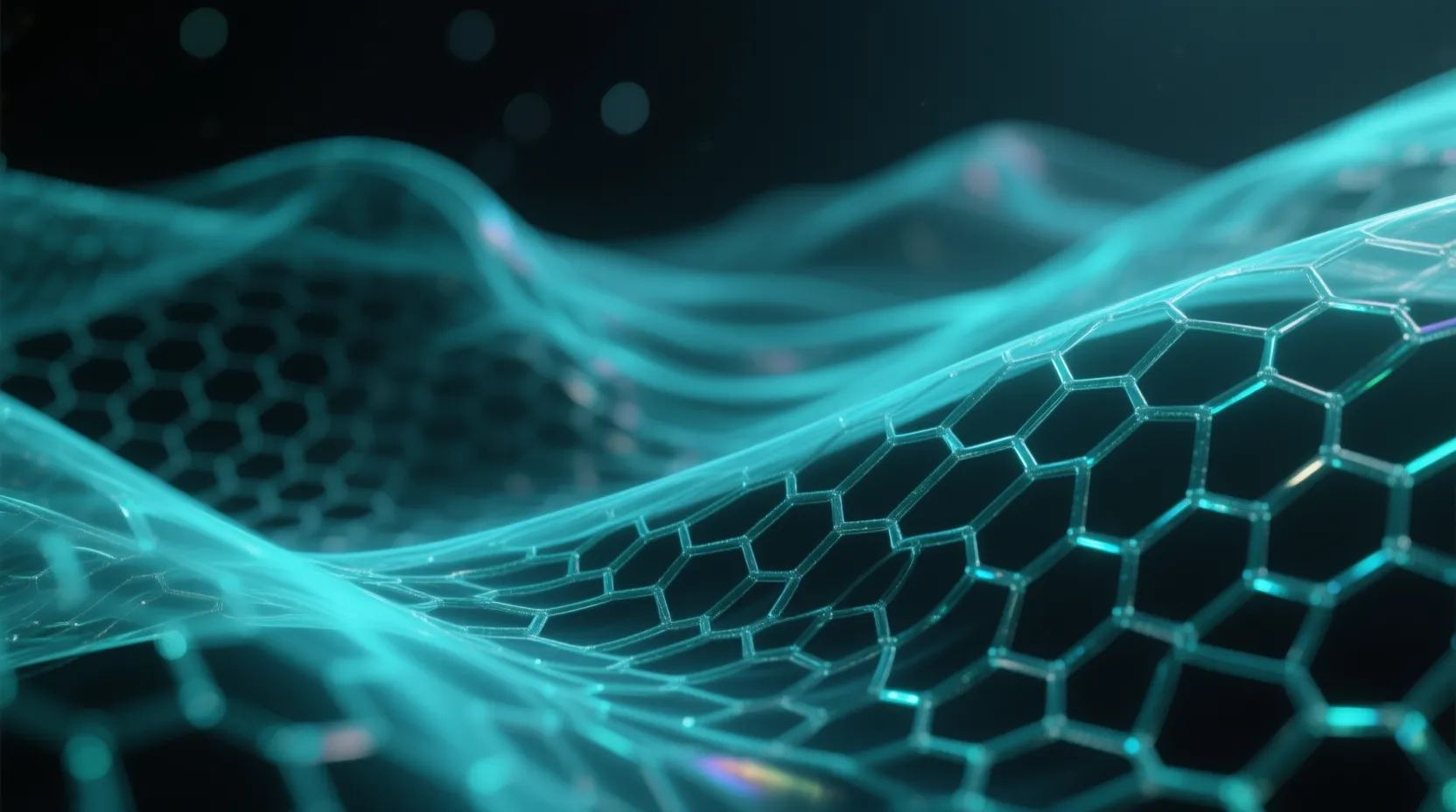
Graphene oxide (GO) is graphene, a single layer of carbon atoms arranged in a hexagonal lattice, carrying oxygen-containing groups such as hydroxyl, epoxide and carboxyl. Those groups let it disperse in water and other polar liquids, which pristine graphene does not, and they give chemists handles to tune it for a specific use.
How is graphene oxide different from graphene?
Graphene is a pure carbon sheet that conducts electricity very well but is hard to disperse in liquids and polymers. Graphene oxide gives up much of that conductivity in exchange for dispersibility and chemistry: it mixes into liquids and matrices more easily and can be functionalized. Removing most of the oxygen groups produces reduced graphene oxide, which recovers part of the conductivity.
How is graphene oxide made?
Graphene oxide is generally made by oxidizing graphite and exfoliating it into thin sheets; classic routes use strong oxidizers in acid. Allkemie produces graphene oxide with its own synthesis method, which is patented and granted, so that particle size, functionalization and dispersion medium can be tuned for each application.
What is graphene oxide used for?
Graphene oxide is used to reinforce polymers and cement, in coatings and membranes, and as an additive in liquids such as fuels. Allkemie focuses on two applications with measured data: GODA, a diesel additive, and graphene oxide formulated for specialty polymers such as polypropylene and nylon.
What is GODA?
GODA is Allkemie's graphene oxide diesel additive. It is dosed directly into the fuel, with no engine modifications, and its results were measured in a third-party ASTM test campaign run and reviewed by LANDACBIO at the National Polytechnic Institute of Mexico.
Does graphene oxide make polymers stronger?
In Allkemie's measurements, graphene oxide formulated for the matrix raised the tensile strength of polypropylene and nylon and the compressive strength of cement, compared with the same material without the additive. Results depend on the matrix and the process, so they are starting points for an evaluation, not a guarantee.
Can graphene oxide add anti-bio and anti-chemical functionality to polymers?
Allkemie's position is that graphene oxide can enable CBRN capabilities in everyday polymers, including anti-bio and anti-chemical functionality. Allkemie has not published performance figures for these capabilities yet.
Where is Allkemie based and how can I get a sample?
Allkemie has offices in Somerville, Massachusetts and Austin, Texas. To request a sample or an evaluation, email erick.ramosmurillo@allkemie.com or rickrod@allkemie.com; there are no forms, and a person replies.